Adults with DD Waiver in Illinois: What Providers Need to Know
Learn what Illinois providers need to know about the Adults with Developmental Disabilities Waiver, including eligibility, services, documentation, staffing, provider readiness, and compliance.
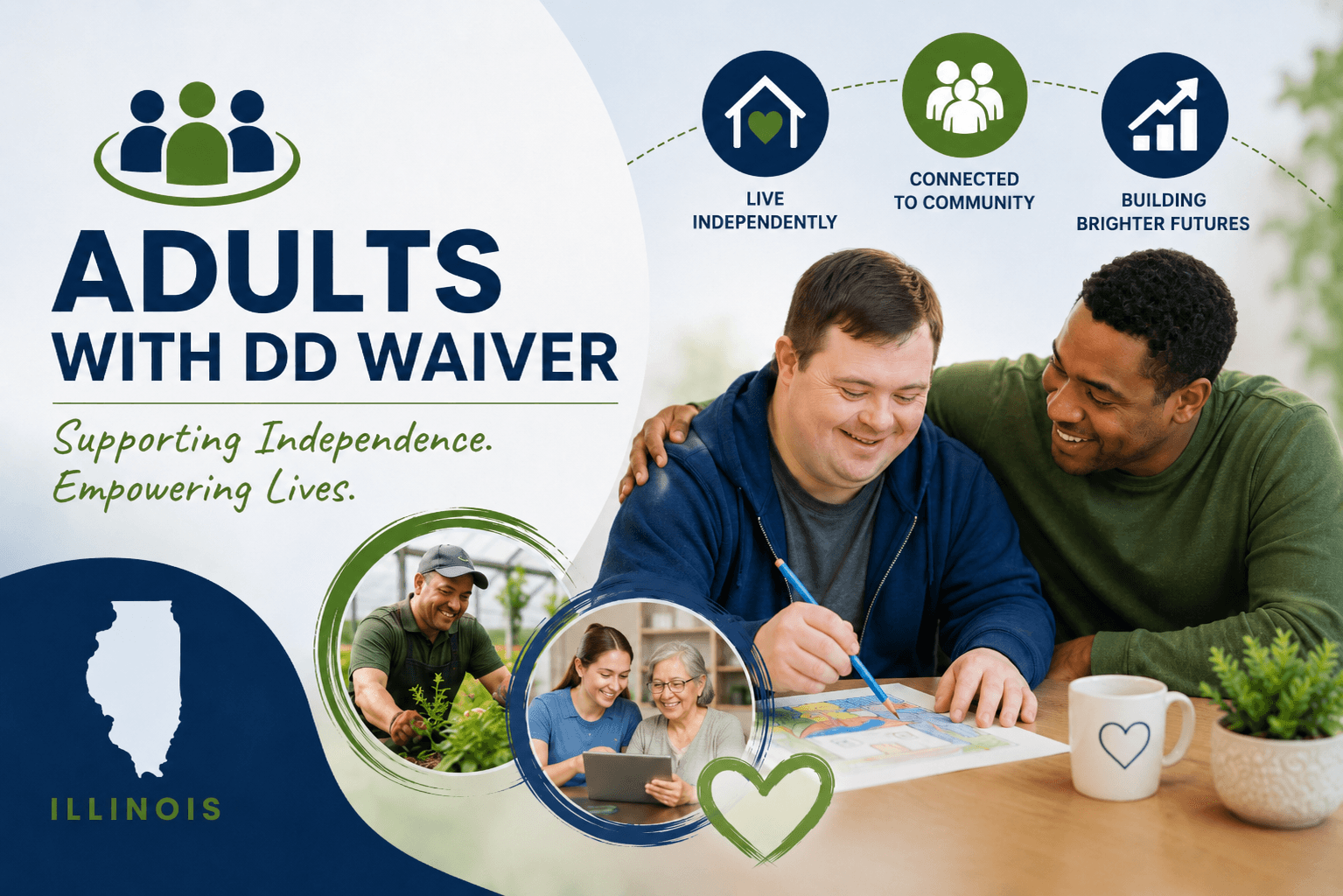
The Adults with Developmental Disabilities Waiver is one of the most important Illinois programs for adults with autism, intellectual disabilities, and other developmental disabilities who need long-term supports in the community.
For providers, this waiver creates significant opportunities to serve adults who need home-based support, day services, behavioral support, employment support, residential habilitation, and other individualized services. But it also requires strong systems. Agencies need to understand waiver eligibility, service authorization, provider readiness, staffing, documentation, billing, and compliance.
This is not a program where agencies can simply have staff available and begin services. The provider must understand how the Illinois adult DD waiver works and how the service fits into the participant’s support plan and waiver structure.
This guide explains what Illinois providers need to know about the Adults with Developmental Disabilities Waiver and where FC Consulting can help.
What the Illinois Adults with DD Waiver Is
The Adults with Developmental Disabilities Waiver is a Medicaid Home and Community Based Services waiver for adults age 18 and older with developmental disabilities who are at risk of institutional placement.
The purpose of the waiver is to help eligible adults receive needed services in home and community settings rather than in an institutional setting. This gives participants more options for living, working, and participating in the community while still receiving support.
For providers, this means the waiver is not just a funding source. It is a structured service system with eligibility rules, operational requirements, service definitions, and documentation expectations.
The waiver can support adults with:
- Autism
- Intellectual disabilities
- Developmental disabilities
- Long-term support needs that would otherwise place them at risk of ICF-I/DD placement
Agencies should understand that this waiver is part of a larger state system. It is not a private home care model. It is a regulated Medicaid waiver program with state oversight.
Who the Adult DD Waiver Serves
Illinois HFS says the adult DD waiver serves individuals with an intellectual or developmental disability who are age 18 or older and at risk of placement in an ICF-I/DD.
To qualify, the person generally must:
- Be a U.S. citizen or legal alien
- Be an Illinois resident
- Be age 18 or older
- Be enrolled in Medicaid, including through the Health Benefits for Workers with Disabilities program when applicable
- Be assessed through ICAP as eligible for an institutional level of care for persons with intellectual and developmental disabilities
- Not need 24-hour nursing care
- Be able to live safely in the home or community with waiver services
For providers, the key point is that diagnosis alone is not enough. A provider should not promise that someone qualifies for the waiver simply because they have autism or another developmental disability. Eligibility is tied to the full waiver criteria and assessment process.
How People Access the Waiver
The HFS adult DD waiver page says the point of entry for possible services is through a Preadmission Screening Agency or an Independent Service Coordination Agency.
That matters for providers because referrals are part of a larger system. An agency should understand that participant access is connected to state and local developmental disability coordination processes, not just direct agency intake.
Before services begin, providers should know:
- Which coordinating entity is involved
- What services have been approved
- What the participant’s plan of care or support plan allows
- Whether the provider is approved for the service being delivered
- Whether the staff assigned to the participant are qualified for that service
A strong provider does not begin services based only on interest or verbal discussion. It confirms that the participant, service, provider, and authorization all align.
What Services the Waiver May Cover
The Illinois adult DD waiver includes a broad set of services. HFS lists services such as adaptive equipment, adult day care, assistive technology, behavior intervention and treatment, behavioral services, community day services, emergency home response services, home accessibility modifications, non-medical transportation, occupational therapy, personal support, physical therapy, remote support, residential habilitation, self-direction assistance, skilled nursing, speech therapy, supported employment, temporary assistance, caregiver training and counseling, vehicle modification, and 24-hour stabilization services.
This broad service menu matters because many agencies support more than one part of the participant’s life. One provider may focus on personal support and community-based services. Another may provide residential habilitation. Another may focus on behavior intervention or employment support.
Agencies should not assume every service works the same way. Each service line may have different staffing expectations, documentation patterns, billing rules, training needs, and service delivery structures.
Residential and Community-Based Support
One of the most important features of the adult DD waiver is that it supports people in community settings.
That may include:
- Support in the participant’s home
- Support in other community settings
- Day services
- Employment support
- Community-based habilitation
- Residential habilitation in approved settings
For providers, this means service delivery is often person-centered and spread across real-life settings, not just clinic-style environments.
A provider may need systems for:
- In-home supports
- Community integration
- Day programming
- Behavior intervention
- Transportation coordination
- Staff scheduling across multiple locations
- Residential documentation
- Participant choice and rights
- Crisis response and stabilization planning
This is one reason strong operations matter so much in the adult DD waiver space.
Why Documentation Matters So Much
Documentation is one of the most important parts of adult DD waiver operations. A provider must be able to show what service was delivered, when it was delivered, who delivered it, and how it supported the participant’s approved needs.
Good documentation is not just a billing task. It is also a quality and compliance task.
A strong service note should make it clear:
- What support was provided
- Where the service occurred
- Which staff member delivered it
- How long the service lasted or how many units were used
- How the support related to the participant’s goals or needs
- What progress, response, or outcome was observed
- Whether there were safety, behavioral, or follow-up concerns
Weak notes can create problems even when good care was provided. If a note is vague, late, incomplete, or disconnected from the service plan, it may create billing and audit risk.
For Illinois adult DD waiver providers, documentation should be reviewed regularly, not only when a claim is denied or a file is requested.
Staffing Challenges in Adult DD Services
The adult DD waiver depends heavily on staffing. Many providers need direct support professionals, behavioral staff, residential staff, day program staff, employment support staff, nurses, therapists, and administrative personnel.
The challenge is not simply finding workers. The challenge is building a workforce that is qualified, trained, documented, and supported.
Agencies should be able to answer:
- Are staff qualified for the services they deliver?
- Are training records current?
- Are background checks completed and organized?
- Are staff matched correctly to participant needs?
- Are supervisors reviewing documentation and service quality?
- Are staffing levels strong enough to support consistent service delivery?
- Are day, home, and residential supports coordinated well?
If these questions are hard to answer, the provider may have operational risk even before a formal review happens.
Why Provider Readiness Matters
Some agencies enter the Illinois DD waiver space because they see community need, but they underestimate the administrative side of the work.
A waiver provider needs more than caring staff. It needs a real operating system.
That system should include:
- Provider enrollment readiness
- Staff file organization
- Background check tracking
- Training record tracking
- Authorization review
- Participant plan review
- Documentation templates
- Billing review
- Internal audits
- Incident reporting procedures
- Supervisor oversight
- Quality improvement processes
Without these systems, providers often become reactive. They spend time fixing missing notes, correcting billing issues, replacing unprepared staff, or responding to compliance concerns instead of focusing on participant care and program growth.
Common Mistakes Providers Should Avoid
Illinois adult DD waiver providers can reduce risk by avoiding a few common mistakes.
One common mistake is assuming a referral means services can begin immediately. Services should be reviewed against the participant’s approved supports and the provider’s approved service role.
Another mistake is treating all services the same. Personal support, residential habilitation, community day services, and behavioral services may require different workflows and staff oversight.
A third mistake is letting documentation become too general. In waiver services, the note should show the actual support delivered, not just broad statements.
Another issue is growing too fast. Agencies sometimes add participants before building the staff structure and documentation systems needed to support quality care.
Finally, some providers forget that room and board is not covered by waiver funding. This matters especially for residential providers that need a clear understanding of what the waiver pays for and what it does not.
How Agencies Can Build a Strong Adult DD Waiver Program
A strong Illinois adult DD waiver provider should build systems before scale.
That starts with service clarity. Leadership should know exactly which services the agency provides, what staff qualifications those services require, and what documentation must support each one.
Then the agency should make sure participant records, staff files, and billing processes are connected. A service that is scheduled should also be authorized, staffed correctly, documented properly, and reviewed before billing.
Agencies should also review operations regularly. Internal chart reviews, supervision checks, training follow-up, and billing audits help identify problems early.
The goal is to create a provider system that is organized enough to grow without losing service quality.
Where FC Consulting Can Help Illinois Providers
FC Consulting supports Illinois developmental disability, ABA, waiver, behavioral health, and human service providers with staffing, documentation, compliance readiness, credential organization, and operational systems.
For organizations working in the adult DD waiver space, FC Consulting can help with:
- Adult DD waiver documentation review
- Staff file organization
- Background check tracking
- Training record organization
- Provider readiness review
- Service authorization workflow review
- Billing readiness review
- DSP and behavioral health staffing support
- Residential and community-based workflow planning
- Policy and procedure development
- Internal audit preparation
- Operational growth planning
This matters because providers do not only need more referrals. They need the internal systems that help them manage services correctly as the organization grows.
FC Consulting helps agencies build the practical structure behind the service so teams can work more clearly and leadership can manage compliance with more confidence.
Final Takeaway
The Illinois Adults with Developmental Disabilities Waiver is a major program for adults age 18 and older with autism, intellectual disabilities, and other developmental disabilities who need long-term supports in the community.
For providers, the opportunity is significant, but so is the responsibility. Agencies need to understand waiver eligibility, point-of-entry processes, service definitions, staff qualifications, participant support planning, documentation, and billing expectations.
A strong adult DD waiver provider should have:
- Clear service lines
- Organized staff files
- Strong documentation systems
- Authorization review processes
- Billing readiness
- Qualified staff
- Internal quality checks
- A realistic plan for growth
FC Consulting helps Illinois providers strengthen the systems behind adult DD waiver services so they can serve participants more consistently and grow more confidently.
If your organization needs help with adult DD waiver documentation, staffing support, provider readiness, compliance workflows, or operational systems in Illinois, FC Consulting can help you identify gaps and build a practical plan.
Need help applying this?
Talk with FC Consulting about your agency's next step.
We can help with compliance, licensing, operations, workforce support, and provider readiness.
Contact us