DD Waiver Staffing Minnesota: Complete Guide
A practical staffing guide for Minnesota DD Waiver providers covering direct support staff, supervisors, training, documentation, compliance, scheduling, and how to build a reliable waiver service team.
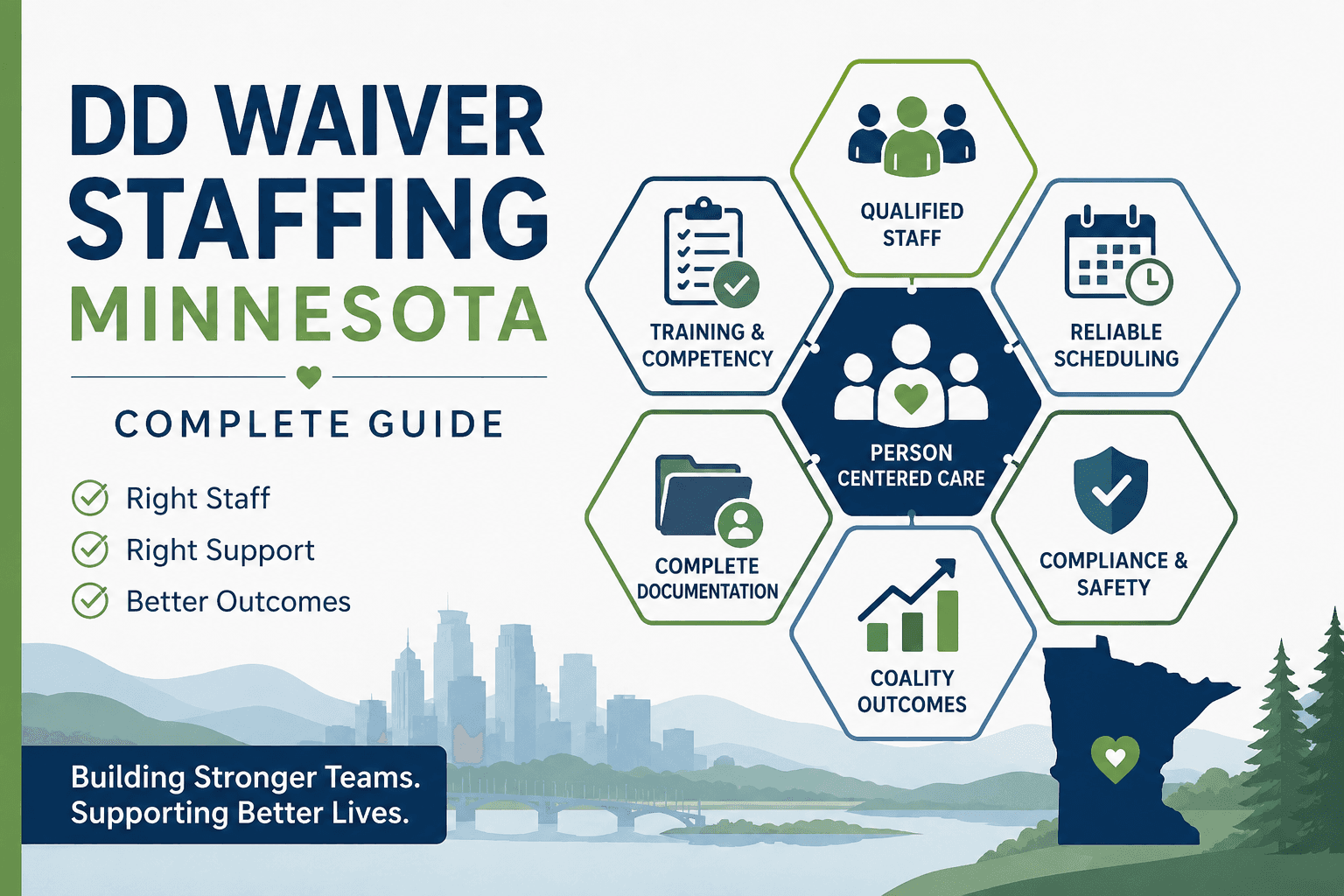
Staffing a DD Waiver Program in Minnesota Requires More Than Filling Shifts
For DD Waiver providers in Minnesota, staffing is one of the most important parts of running a safe, reliable, and compliant program. The Developmental Disabilities Waiver supports children and adults with developmental disabilities or related conditions who need home and community-based services. For providers, this means the staffing model must support each person’s daily needs, service plan, safety, rights, independence, and community participation.
Many DD Waiver providers struggle with the same staffing challenges: not enough direct support professionals, high turnover, incomplete training records, inconsistent supervision, missed documentation, and scheduling gaps. These problems can affect service quality, billing readiness, compliance, and the provider’s ability to grow.
This guide explains how Minnesota DD Waiver providers can build a stronger staffing system and avoid common staffing mistakes.
1. Start With the Person’s Support Plan
DD Waiver staffing should begin with the person’s support plan, not just the provider’s schedule. Every person may have different needs related to personal care, behavior support, medication support, community activities, employment goals, daily routines, safety, communication, and independence.
Before assigning staff, providers should understand:
- What services are authorized
- What level of support the person needs
- What staff responsibilities are listed in the support plan
- What training is required for that person
- Whether the person needs awake overnight, asleep overnight, 24-hour support, or scheduled support
- Whether behavior support, medical support, or communication support is needed
- What documentation staff must complete
A strong staffing model connects the right staff to the right person, instead of simply filling open hours.
2. Know the Key Roles in a DD Waiver Staffing Structure
A DD Waiver provider may need several roles to keep services organized. The exact structure depends on the services provided, number of people served, locations, and licensing requirements.
Common roles may include:
- Direct support professionals
- Lead direct support staff
- Designated coordinator
- Designated manager
- Program supervisor
- Scheduling coordinator
- Training coordinator
- Documentation or compliance reviewer
- HR or onboarding support
- Billing and authorization support
Not every provider needs a large team at the beginning. However, every provider should clearly know who is responsible for supervision, training, documentation review, scheduling, staff files, incident follow-up, and communication with case managers or support teams.
3. Hire Direct Support Professionals Carefully
Direct support professionals, often called DSPs, are the foundation of DD Waiver services. They are often the staff members working most closely with the person served.
A strong DSP should be:
- Reliable
- Patient
- Respectful
- Person-centered
- Comfortable supporting people with disabilities
- Able to follow written plans
- Able to document clearly
- Willing to learn
- Professional with families and team members
- Able to communicate concerns quickly
Providers should avoid hiring only to “cover the shift.” A person may be available, but that does not always mean they are the right fit for the person’s needs. A poor match can lead to missed expectations, family concerns, staff burnout, or safety issues.
The best hiring process looks at both availability and fit.
4. Verify Staff Qualifications and Competency
Minnesota DD Waiver providers should keep organized staff files that show the person is qualified and trained for their role. Staff competency matters because direct support work affects health, safety, rights, service quality, and compliance.
A staff file may include:
- Resume or application
- Job description
- Background study documentation
- Training records
- Orientation records
- Person-specific training
- Competency checks
- Performance evaluations
- Driver documentation, if transportation is part of the role
- Medication training, if applicable
- Incident reporting training
- Rights and maltreatment reporting training
- Start date and assigned location or service
Providers should make sure staff understand the primary disability and individual support needs of the people they serve. Staff should not be placed into complex support situations without proper training and supervision.
5. Build a Strong Orientation Process
A clear orientation process helps new staff understand the job before they are left on their own. Orientation should not be treated as a quick checklist. It should prepare staff to safely and confidently support people.
A strong DD Waiver orientation may include:
- Job duties and expectations
- Policies and procedures
- Incident response and reporting
- Safety practices
- Person-centered service delivery
- Rights of people served
- Maltreatment reporting
- Data privacy and confidentiality
- Support plan review
- Emergency procedures
- Documentation expectations
- Medication or health-related responsibilities, when applicable
Providers should combine classroom or online training with supervised on-the-job training. Staff may understand a policy on paper but still need coaching to apply it in real situations.
6. Train Staff on Person-Specific Needs
General training is important, but DD Waiver staffing also requires person-specific training. Each person served may have different routines, preferences, risks, goals, communication styles, medical needs, behavior support strategies, and community participation goals.
Before staff work independently with a person, they should understand:
- The person’s daily routine
- Communication needs
- Support preferences
- Health and safety risks
- Behavioral support strategies
- Medication or medical support needs
- Community access goals
- Emergency contacts
- Documentation requirements
- What to do when something changes
Person-specific training helps protect the person receiving services and gives staff more confidence in the role.
7. Set Up Supervision Before Problems Happen
Supervision is one of the most important parts of DD Waiver staffing. Staff need support, feedback, and guidance, especially when working with people who have complex needs.
A good supervision system should include:
- Clear reporting structure
- Assigned supervisor
- Regular check-ins
- Documentation review
- Incident review
- Coaching after concerns
- Performance feedback
- Training follow-up
- Observation of staff performance
- Communication expectations
Supervision should not only happen after something goes wrong. The best providers use supervision to prevent problems, improve staff confidence, and keep services consistent.
8. Make Scheduling Reliable and Person-Centered
Scheduling is not just an administrative task. In DD Waiver services, scheduling affects safety, consistency, family trust, and service quality.
Providers should consider:
- Staff availability
- Staff qualifications
- Person-specific training
- Personality and support match
- Transportation needs
- Overtime risk
- Backup staff
- Emergency coverage
- Consistency for the person served
A reliable schedule should include backup plans. Providers should know who can cover if someone calls out, who is trained for each person, and who must be contacted when coverage changes.
If scheduling is chaotic, the whole program becomes stressful.
9. Train Staff on Documentation From the Beginning
Documentation is a major part of waiver service operations. Staff should understand what to document, when to document, and why documentation matters.
Good documentation should show:
- What service was provided
- Who provided the service
- When the service happened
- Where the service happened
- What support was provided
- How the person responded
- Any incidents, changes, or concerns
- How the service connected to the person’s support plan
Providers should avoid vague notes such as:
- “Helped client.”
- “Shift went fine.”
- “No issues.”
- “Provided support.”
Instead, notes should be specific enough to show what actually happened and how the staff supported the person.
10. Keep Staff Files Audit-Ready
Staffing compliance is much easier when staff files are organized from the beginning. Providers should not wait until a review, audit, or licensing visit to find missing documents.
A simple staff file review should check:
- Is the background study complete?
- Is the job description signed?
- Is orientation documented?
- Is annual training complete?
- Is person-specific training documented?
- Are competency checks completed?
- Are performance reviews documented?
- Are required licenses or certifications current?
- Is the staff member assigned only to services they are trained for?
A monthly internal file review can help providers catch issues before they become bigger problems.
11. Avoid Common DD Waiver Staffing Mistakes
Many providers run into staffing problems because they grow faster than their systems.
Common mistakes include:
- Hiring too quickly without checking fit
- Missing training documentation
- Weak supervision
- No backup staffing plan
- Poor communication with families or teams
- Staff working before person-specific training is complete
- Incomplete documentation
- Unclear job duties
- No performance review process
- Waiting until a licensing review to organize staff files
These issues are preventable with a clear staffing plan, organized onboarding, and consistent internal review.
How FC Consulting Helps DD Waiver Providers
FC Consulting supports behavioral health and disability service providers with staffing, compliance organization, and operational support. For DD Waiver providers in Minnesota, we help agencies build stronger staffing systems so they can serve people more safely and confidently.
We can help with:
- DD Waiver staffing strategy
- Direct support professional staffing support
- Staff qualification file organization
- Onboarding checklist creation
- Training tracking systems
- Documentation workflow improvement
- Scheduling workflow support
- Compliance tracking
- Audit-readiness preparation
- Program operations support
Our goal is to help providers stay organized, reduce staffing stress, and build systems that support long-term growth.
Final Thoughts
DD Waiver staffing in Minnesota requires more than hiring people to cover shifts. Providers need trained staff, clear supervision, organized documentation, person-specific support, reliable scheduling, and complete staff files.
The right staffing system helps protect the people served, supports staff success, and keeps the provider better prepared for compliance reviews.
If your DD Waiver agency needs help finding staff, organizing staff files, improving onboarding, or building a stronger staffing workflow, FC Consulting can help.
Contact FC Consulting today to discuss DD Waiver staffing support for your agency.
Need help applying this?
Talk with FC Consulting about your agency's next step.
We can help with compliance, licensing, operations, workforce support, and provider readiness.
Contact us