How to Staff a CTSS Program in Minnesota
Learn how to staff a CTSS program in Minnesota with the right mental health professionals, practitioners, behavioral aides, supervision, documentation, and billing-readiness systems.
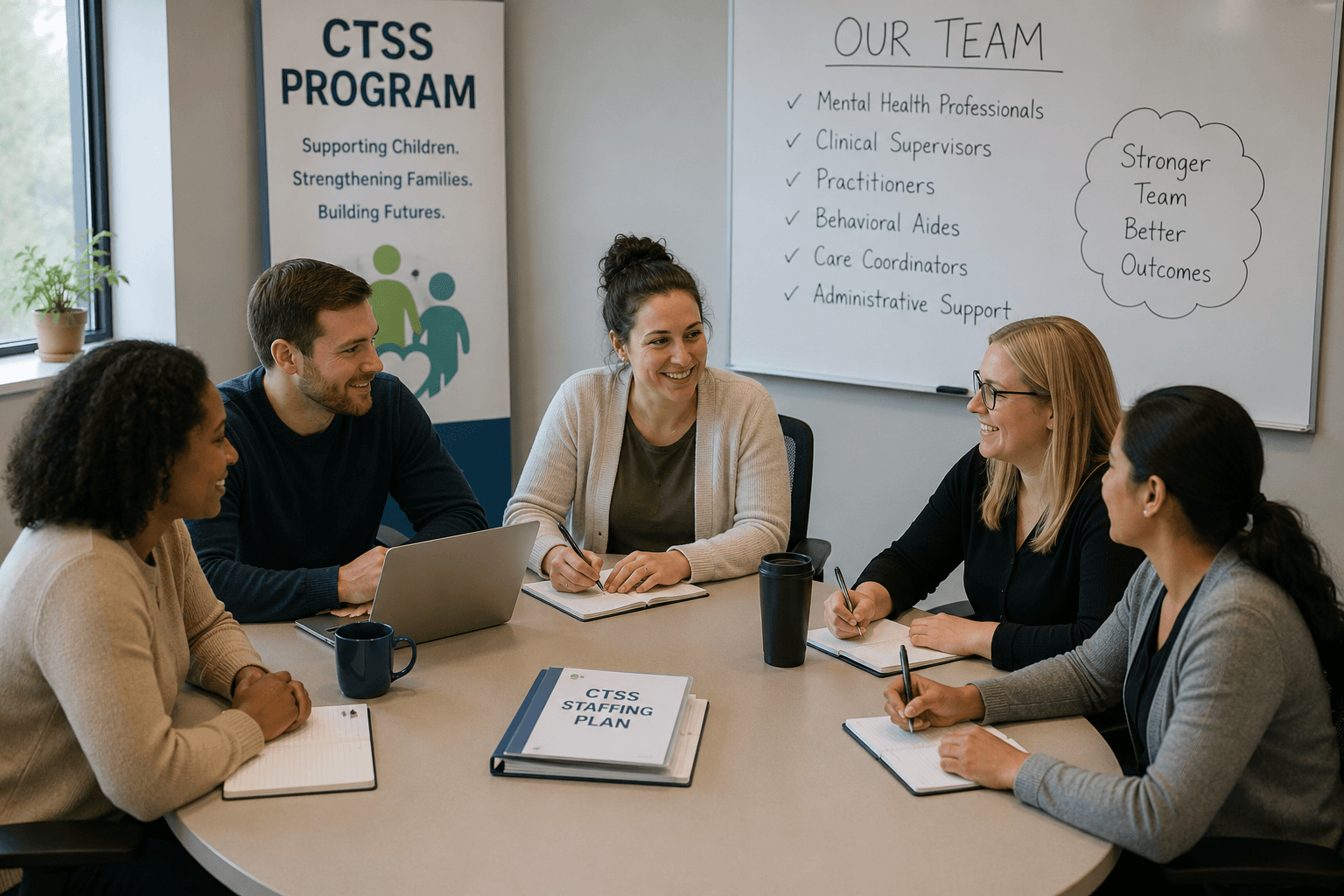
Staffing a CTSS Program in Minnesota Takes More Than Filling Open Positions
Children’s Therapeutic Services and Supports, commonly called CTSS, is an important Minnesota mental health service for children and families. For agencies, staffing a CTSS program is not just about hiring people quickly. It is about making sure the right people are in the right roles, with the right qualifications, supervision, documentation habits, and understanding of CTSS requirements.
Many CTSS providers need staff urgently, but hiring too fast without a clear process can create problems later. Missing qualification documents, unclear supervision, weak documentation, or assigning services to the wrong role can affect billing, compliance, and service quality.
This guide explains how Minnesota CTSS providers can build a stronger staffing structure and avoid common staffing mistakes.
1. Know the Core CTSS Roles You Need
Before posting jobs, agencies should understand which roles are needed to operate a CTSS program safely and effectively.
A CTSS staffing structure may include:
- Mental health professionals
- Clinical trainees
- Mental health practitioners
- Mental health behavioral aides
- Clinical supervisors
- Intake or program coordinators
- Billing and authorization support
- Documentation or compliance reviewers
Not every agency needs a large team right away. However, every agency should know who provides services, who supervises staff, who reviews documentation, and who keeps staff files organized.
A clear staffing plan helps the agency grow without becoming disorganized.
2. Prioritize Mental Health Professionals
Mental health professionals are central to a CTSS program. They support clinical decision-making, treatment planning, supervision, documentation review, and service quality.
When hiring or contracting with mental health professionals, agencies should look for candidates who understand children’s mental health, diagnostic assessments, individual treatment plans, family involvement, medical necessity, supervision, and documentation expectations.
This role should not be treated as just a paperwork or signature role. A strong mental health professional helps protect the quality and compliance of the entire program.
Before bringing someone on, agencies should verify licenses, credentials, experience, supervision responsibilities, and whether the person can support the agency’s CTSS service model.
3. Use Clinical Trainees and Practitioners the Right Way
Clinical trainees and mental health practitioners can help CTSS agencies increase service capacity, but they need clear supervision and role expectations.
Before assigning services, agencies should confirm:
- Education or degree documentation
- License or trainee status, if applicable
- Experience requirements
- Supervision plan
- Role description
- Services the person can provide
- Documentation expectations
- Training records
Clinical trainees and practitioners can be valuable team members, especially for growing agencies. However, they should not be placed into services without knowing exactly who supervises them, what they are allowed to do, and how their documentation will be reviewed.
4. Build a Reliable Mental Health Behavioral Aide Team
Mental health behavioral aides can support children and families by helping practice skills in real-world settings. This role can be very helpful, especially when children need support applying skills at home, school, or in the community.
However, behavioral aides need strong training and supervision. They should not be treated as independent therapists or independent skills trainers. Their work should connect to the child’s treatment plan and the direction of qualified clinical staff.
Good behavioral aide candidates are usually:
- Reliable
- Patient
- Professional
- Comfortable working with children and families
- Able to follow treatment plans
- Good at communication
- Open to coaching
- Careful with documentation
- Able to maintain boundaries
Before aides begin working with clients, agencies should train them on their role, service limits, documentation, communication expectations, and when to ask for help.
5. Do Not Ignore Admin, Billing, and Authorization Support
A CTSS program can have strong clinical staff and still struggle if the administrative side is weak.
Agencies need support for:
- Intake tracking
- Referral follow-up
- Eligibility documents
- Diagnostic assessment tracking
- Treatment plan tracking
- Authorization follow-up
- Scheduling
- Progress note reminders
- Billing review
- Staff file organization
- Audit preparation
If direct care staff are hired but billing and documentation systems are not ready, the agency can quickly fall behind. Good staffing is not only about clinicians and aides. It also includes the people who keep the program organized.
6. Create Clear CTSS Job Descriptions
CTSS providers should avoid generic job descriptions. Each role should clearly explain the required qualifications, duties, supervision structure, documentation expectations, and services the person may provide.
A strong job description should include:
- Job title
- Required qualifications
- Preferred experience
- Required documents
- Supervision structure
- Services connected to the role
- Documentation responsibilities
- Training requirements
- Work setting
- Schedule expectations
- Background study requirement
For example, a mental health behavioral aide job description should not sound the same as a mental health practitioner job description. A clinical trainee role should not sound the same as a licensed mental health professional role.
Clear job descriptions help attract the right candidates and reduce confusion after hiring.
7. Verify Qualifications Before Staff Start
One of the biggest CTSS staffing mistakes is hiring someone first and checking qualifications later.
Before the staff member begins services, agencies should review:
- Resume
- Degree or transcript
- License or certification
- Experience documentation
- Background study status
- Training requirements
- Supervision needs
- Role eligibility
- Services the person can provide
Every position should have a checklist. This makes onboarding easier and helps the agency avoid missing documents that may be needed later during internal reviews, billing checks, or audits.
8. Set Up Supervision Before Assigning Clients
Supervision should be set up before staff begin providing services. Staff should know who supervises them, how often supervision happens, what is reviewed, and how concerns should be reported.
A CTSS supervision system should include:
- Assigned supervisor
- Supervision schedule
- Case consultation process
- Documentation review
- Treatment plan connection
- Performance feedback
- Training expectations
- Crisis escalation process
Strong supervision protects the client, the staff member, and the agency. It also helps new staff improve faster and reduces compliance risk.
9. Train Staff on Documentation From Day One
CTSS documentation should clearly show what service was provided, who provided it, when it happened, where it happened, what goal was addressed, what intervention was used, and how the child responded.
Staff should avoid vague notes such as:
- “Worked on goals.”
- “Client participated.”
- “Provided support.”
- “Session went well.”
Instead, notes should connect directly to the treatment plan and support the service being billed.
Documentation training should happen during onboarding and continue through supervision. Agencies should regularly review notes and correct issues early before they become bigger problems.
10. Avoid Common CTSS Staffing Mistakes
Many CTSS providers run into the same staffing problems.
Common mistakes include:
- Hiring before confirming qualifications
- Missing staff file documents
- Weak supervision systems
- Unclear job descriptions
- Poor documentation training
- Assigning services outside a staff member’s role
- No billing review process
- No backup staffing plan
- Waiting until an audit to organize records
These issues are preventable when the agency has a clear staffing plan, onboarding checklist, and internal review process.
How FC Consulting Helps CTSS Providers
FC Consulting supports behavioral health agencies with staffing, compliance organization, and operational support. For CTSS providers, we help agencies build stronger staffing systems so they can serve families and grow with more confidence.
We can help with:
- CTSS staffing strategy
- Mental health professional recruitment support
- Practitioner and behavioral aide staffing support
- Staff qualification file organization
- Job description improvement
- Onboarding checklist creation
- Documentation process improvement
- Billing-readiness support
- Internal compliance tracking
- Audit-readiness preparation
Our goal is to help CTSS agencies find qualified staff, stay organized, and reduce operational stress.
Final Thoughts
Staffing a CTSS program in Minnesota requires more than posting a job online. Agencies need qualified professionals, trained practitioners, supervised behavioral aides, clear documentation expectations, and organized compliance systems.
The right staffing structure can help a CTSS program grow without becoming chaotic.
If your CTSS agency needs help finding staff, organizing staff files, improving documentation, or preparing for growth, FC Consulting can help.
Contact FC Consulting today to discuss CTSS staffing support for your agency.
Need help applying this?
Talk with FC Consulting about your agency's next step.
We can help with compliance, licensing, operations, workforce support, and provider readiness.
Contact us