School District ABA Programs in Washington: Supporting Students Through Behavior Intervention Plans
School district ABA programs in Washington help students with behavioral, developmental, communication, and learning needs access education through positive behavior supports, Functional Behavioral Assessments, and Behavior Intervention Plans. These programs often require BCBAs, licensed behavior analysts, behavior technicians, paraeducators, and special education teams to support IEP goals, teach replacement skills, collect behavior data, and help students participate safely in school.
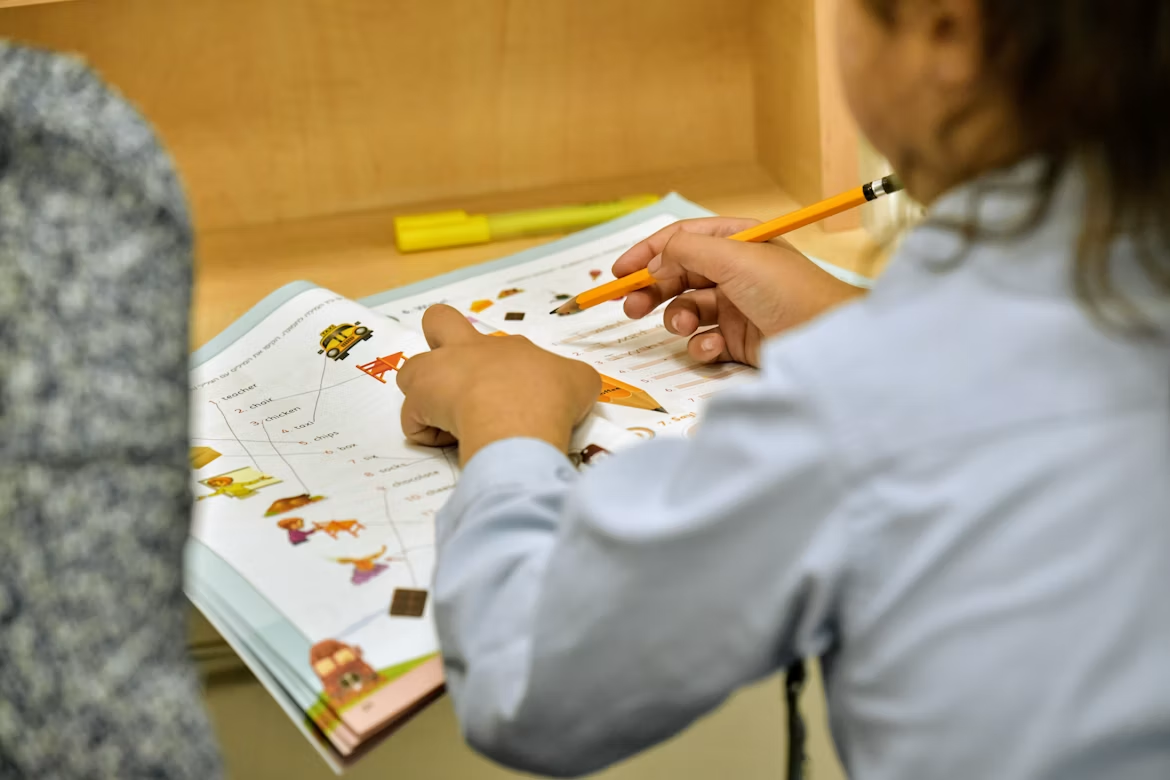
School districts across Washington serve students with a wide range of learning, developmental, communication, and behavioral needs. For students whose behavior affects learning, safety, communication, or participation in school activities, districts may use structured behavior supports, including Applied Behavior Analysis (ABA) strategies, Functional Behavioral Assessments (FBAs), and Behavior Intervention Plans (BIPs).
School-based ABA support is different from clinic-based ABA therapy. In schools, the focus is educational. The goal is to help students access instruction, participate in the school environment, build replacement skills, and receive the supports they need as part of their educational program.
For many districts, this creates a need for trained behavior professionals, including BCBAs, licensed behavior analysts, assistant behavior analysts, certified behavior technicians, paraeducators, special education staff, and behavior support teams.
This article is for informational purposes only and is not legal, clinical, or special education advice. Families and providers should verify current requirements with Washington OSPI, Washington DOH, the local school district, or a qualified special education professional.
What Are School-Based ABA Programs?
School-based ABA programs use behavior science principles to help students develop skills and reduce behaviors that interfere with learning. These services may be delivered in general education classrooms, special education classrooms, resource rooms, transition programs, or district-level behavior support programs.
In a school setting, ABA may support goals such as:
- Improving communication
- Increasing classroom participation
- Building social and peer interaction skills
- Teaching emotional regulation
- Supporting transitions between activities
- Reducing unsafe or disruptive behavior
- Teaching replacement behaviors
- Supporting independence with school routines
Washington OSPI explains that an Individualized Education Program, or IEP, is the written plan for a student eligible for special education. The IEP describes the special education services, related services, academic goals, behavioral goals, and supports the student will receive during the school year.
The Role of Behavior Intervention Plans
A Behavior Intervention Plan, commonly called a BIP, is often central to school-based ABA support. OSPI explains that a BIP is incorporated into a student’s IEP when the IEP team determines it is necessary for the student to receive a Free Appropriate Public Education, or FAPE. A BIP should describe the behavior pattern affecting learning, the conditions contributing to the behavior, positive behavioral interventions and supports, and the skills that will be taught as alternatives to the challenging behavior.
A strong BIP should not simply list consequences. It should help the school team understand why the behavior is happening and what skills the student needs to learn instead.
For example, if a student leaves the classroom during difficult assignments, the plan may include teaching the student how to request a break, ask for help, use a visual schedule, or complete work in smaller steps. The goal is to replace the unsafe or disruptive behavior with a more appropriate communication or coping skill.
Functional Behavioral Assessments
Before developing a behavior plan, schools may complete a Functional Behavioral Assessment, or FBA. OSPI describes an FBA as an evaluation used by a school district to determine the cause or “function” of behavior before developing interventions. The FBA helps the IEP team choose positive behavioral interventions that directly address the student’s needs.
An FBA may include:
- Classroom observations
- Interviews with teachers, families, and staff
- Review of discipline or incident data
- Review of academic and environmental factors
- Identification of triggers
- Analysis of what happens before and after the behavior
- Hypothesis about the purpose of the behavior
This process helps teams avoid guessing. Instead of reacting to behavior after it happens, the school can build a plan around prevention, skill-building, and consistent support.
Why Washington Schools Need BCBAs and Behavior Technicians
Many Washington school districts need trained behavior professionals because behavior support requires careful planning, data collection, implementation, and supervision.
A Board Certified Behavior Analyst, or BCBA, may support school teams by:
- Conducting or reviewing FBAs
- Developing behavior intervention strategies
- Training teachers, paraeducators, and support staff
- Monitoring behavior data
- Supporting IEP teams
- Coaching staff on implementation
- Helping adjust plans when progress is limited
Behavior technicians and school-based support staff may help implement the plan during the school day. They may collect data, support skill-building, help with transitions, reinforce replacement behaviors, and follow the strategies designed by the supervising professional.
In Washington, ABA credentials are regulated through the Washington State Department of Health. Washington DOH recognizes the BCBA credential toward the Licensed Behavior Analyst credential, the BCaBA toward the Licensed Assistant Behavior Analyst credential, and the RBT toward the Certified Behavior Technician credential.
Washington DOH also states that Certified Behavior Technicians are authorized to provide ABA services only when they meet continuing supervision requirements.
School ABA Is Team-Based
School-based behavior support works best when it is not isolated to one person. A successful program usually involves a team, including:
- Special education teachers
- General education teachers
- BCBAs or licensed behavior analysts
- Behavior technicians
- Paraeducators
- School psychologists
- Speech-language pathologists
- Occupational therapists
- Administrators
- Families and caregivers
Each team member sees the student in a different setting. A BCBA may design and monitor the behavior plan, but teachers and support staff are often the ones implementing strategies throughout the school day.
Consistency matters. If the student receives different responses from different adults, progress may be slower. A clear plan helps everyone respond the same way and teach the same replacement skills.
Positive Behavioral Supports in Schools
Washington schools are expected to focus on safe, supportive, and positive approaches. OSPI defines positive behavioral interventions as systematic strategies and instruction that provide alternatives to challenging behaviors, reinforce desired behaviors, and reduce or eliminate the frequency and severity of challenging behaviors. These interventions also consider environmental factors that may trigger behavior and teach students skills to manage their own behavior.
This means a strong school ABA program should focus on:
- Prevention
- Skill-building
- Communication
- Reinforcement
- Environmental adjustments
- Data-based decision making
- Student dignity
- Staff training
- Family collaboration
The goal is not to control the student. The goal is to help the student learn safer, more effective, and more independent ways to participate in school.
Restraint, Isolation, and Crisis Planning
Behavior support plans should not rely on restraint or isolation as routine strategies. OSPI states that Washington law does not allow restraint or isolation on K-12 students during school-sponsored instruction and activities unless necessary to stop behaviors that will cause serious harm. OSPI also encourages districts to build systems that support students in distress and prevent crises before they occur.
Washington special education rules also prohibit aversive interventions for students eligible for special education and prohibit physical restraint or isolation except when the student’s behavior poses an imminent likelihood of serious harm.
If emergency response protocols are developed, Washington rules state that they must be incorporated into the student’s IEP and cannot be used as a substitute for the systematic use of a BIP designed to change, replace, modify, or eliminate a targeted behavior.
This is why trained behavior professionals are so important. A well-designed BIP should reduce the likelihood of crisis by teaching skills, changing environmental triggers, and supporting staff with clear strategies.
What Services Might a School-Based ABA Team Provide?
Depending on the district and the student’s IEP, school-based ABA support may include:
- Functional Behavioral Assessments
- Behavior Intervention Plans
- Classroom behavior consultation
- Direct student support
- Skill acquisition programming
- Social skills support
- Communication support
- Staff training
- Data collection systems
- Parent or caregiver collaboration
- Transition support
- Crisis prevention planning
These services should be individualized. A student who struggles with transitions may need visual supports and transition practice. A student with communication barriers may need replacement communication strategies. A student with unsafe behavior may need a detailed safety and prevention plan.
Benefits for Students and Schools
When implemented correctly, school-based ABA supports can help students stay engaged in learning and reduce the need for reactive discipline. It can also help teachers and support staff feel more confident because they have a clear plan to follow.
Benefits may include:
- Better classroom participation
- Improved communication
- Reduced challenging behavior
- More consistent staff responses
- Stronger IEP implementation
- Better data for decision-making
- Improved family and school collaboration
- Safer learning environments
For districts, having access to BCBAs and behavior technicians can improve the quality of behavior support and help ensure that plans are practical, measurable, and implemented consistently.
Final Thoughts
School district ABA programs in Washington play an important role in supporting students with behavioral, developmental, communication, and learning needs. These programs are not just about reducing behavior. They are about understanding why behavior happens, teaching new skills, and helping students access education in a safe and supportive environment.
As more schools focus on positive behavior supports, Functional Behavioral Assessments, and Behavior Intervention Plans, the need for qualified BCBAs, licensed behavior analysts, behavior technicians, and trained school teams continues to grow. With the right support, students can build meaningful skills, participate more fully in school, and receive services that are aligned with their educational needs.
Need help applying this?
Talk with FC Consulting about your agency's next step.
We can help with compliance, licensing, operations, workforce support, and provider readiness.
Contact us